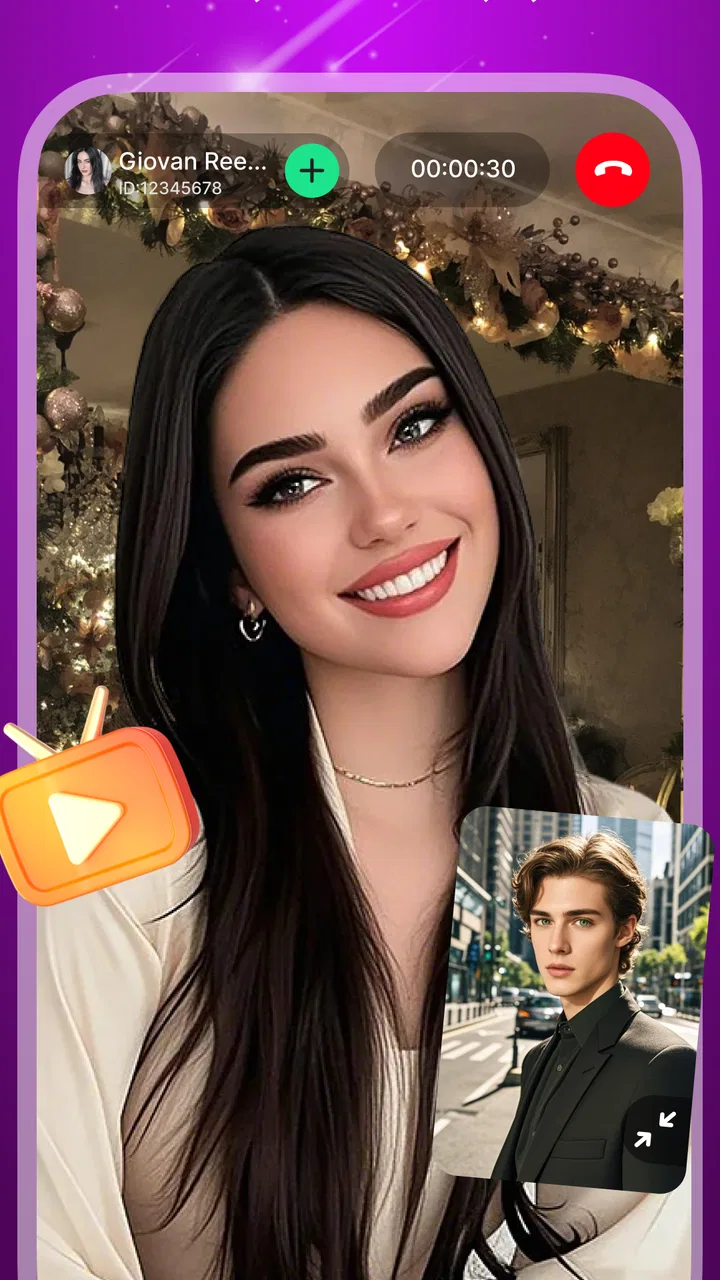
OohYeah - Video Chat & Call
- 4.1
- Rating
- 100.00K
- Installs
- Free
- Price

 Analysis by App-foxy
I approached OohYeah as a social app for one simple situation: I wanted to move from being alone with my phone to having a live video conversation with someone somewhere else. That sounds straightforward, but the quality of the experience depends on what happens between opening the app and actually having a worthwhile call. In my use, the appeal is immediate contact rather than a carefully built social profile. It is aimed at people who enjoy meeting others through live video and who are comfortable with conversations that may feel spontaneous, unpredictable, and more personal than text chat.
Developed by VIVI LIMITED, OohYeah sits in the social category and is free to install. Its store summary presents the central idea as video chat with people worldwide, while the short store description is simply “OohYeah.” That minimal presentation matches the app’s basic attraction: less planning, more direct interaction. It is available for devices running Android 6.0 or later, and the current release is version 1.0.22. The app is marked Mature 17+, which is an important part of deciding whether it belongs on your phone, especially if you are considering it for a younger family member.
From opening the app to completing a real conversation
I focus here on the practical path from launching OohYeah to deciding whether a live exchange is worth continuing, including the small choices that can make a first session feel less awkward. I also look at how I would pace that session rather than treating every moment of silence as a problem. That leads naturally to the more demanding question of what happens when several conversations or longer use put the experience under pressure.
You May Also Like

 Pandora - Music & Podcasts
Pandora’s Music Is Easy to Start, but Harder to Recover
Pandora’s strength is its low-effort path from a seed to a station. Its weak spot is how much confidence it asks you to place in connection, setup, and quiet recovery.

 AccuWeather: Weather Radar
AccuWeather Review: A Quick, Clear Forecast for Everyday Decisions
For everyday plans, the best forecast is the one you can understand quickly. AccuWeather makes rain timing, radar, and local conditions easy to act on, with a few trade-offs.

 Hill Climb Racing
Why Hill Climb Racing Still Turns Crashes Into One More Run
A tiny car, a bumpy hill and one more upgrade: Hill Climb Racing keeps resurfacing because its simple chaos makes every near-miss feel personal.

 AliExpress - Shopping App
AliExpress Makes Global Shopping Feel Personal, but Shoppers Bear the Risk
AliExpress turns a global marketplace into a pocket-sized discovery engine. Its reach is useful, its shopping loop compelling, and its trade-offs easy to miss.

 Lords Mobile: Kingdom Wars
Lords Mobile Is a Kingdom-Building Routine, Not a Quick Match
A case-by-case verdict on the building, battles, device demands, and social commitments that make Lords Mobile rewarding for some players and exhausting for others.

 PDF Scanner app - TapScanner
TapScanner Makes Paperwork Easier to Capture, Check, and Share
TapScanner makes scanning with a phone feel less like a rescue operation and more like a dependable step in getting work done. Its capture tools are useful, though not flawless.
More From Our News Desk
View All News


Starting with the right expectation
The first thing I would tell a friend is not to treat OohYeah like a conventional messaging service. If your goal is to maintain an existing group of close contacts, a familiar messenger will usually be more practical. OohYeah makes more sense when the starting condition is curiosity: you want to speak with people beyond your usual circle, see how quickly a live interaction can begin, or break up a quiet evening with a social exchange.
That distinction matters because live video changes the emotional cost of participation. Text gives you time to edit a reply, ignore a message, or leave a conversation without much pressure. Video asks you to be present immediately. Before using it, I would choose a reasonably private setting, check that the camera view is acceptable, and make sure I am ready to end a conversation if it becomes uncomfortable. Those small preparations make the experience feel more controlled.
The mature age classification also changes how I evaluate the app. I would not describe it as a general-purpose family social tool. Adults who understand the risks of meeting strangers online are the natural audience, while anyone looking for a tightly supervised environment should choose a different type of service. The free download lowers the barrier to trying it, but it does not remove the need for personal judgement.
Moving from intention to live contact
Once I had decided what I wanted from the session, the useful question was whether the app could carry me from browsing or starting an interaction into an actual call without making the process feel like work. OohYeah is strongest when I treat each conversation as a short social opportunity rather than a promise of a lasting connection. That mindset prevents a common mistake: expecting every contact to become a friend, a regular caller, or a meaningful discussion.
A practical workflow is to begin with a limited amount of time in mind. I might open the app during a break, start an interaction, and give the conversation a chance to develop. If the exchange feels natural, I can continue. If it is awkward, repetitive, or simply not a good match, ending it is a reasonable outcome rather than a failure. This is one of the app’s less obvious trade-offs: the speed and openness that make it interesting also mean that not every handoff from one person to another will feel rewarding.
I found that having two or three easy opening topics prepared makes a noticeable difference. Asking where someone is from, what brought them to the app, or what they are doing that day is more useful than waiting for the app to create the entire conversation for me. Video chat is not a substitute for social initiative. The app can put people in the same live space, but the quality of the exchange still depends on tone, patience, and the ability to recognize when the other person is not interested in continuing.
The handoff between strangers
The central handoff in OohYeah is from one unknown person to another. That can be the most entertaining part of the experience, but it is also where friction appears. A new contact may have a different communication style, a poor conversational rhythm, or expectations that do not match mine. I would not interpret a quick ending as a technical failure automatically; sometimes it is simply the social nature of the service.
What helps is keeping personal information limited at the beginning. I would avoid sharing an address, workplace details, financial information, private contact details, or anything that makes it easy for a stranger to identify me offline. This is not a criticism unique to OohYeah; it is a basic rule for open video communication. Still, the app’s purpose makes the reminder especially important because the visual format can create a false sense of familiarity very quickly.
Another useful habit is to separate a pleasant conversation from a reason to trust someone. A person can be friendly on camera and still remain a stranger. I would keep the first interaction inside the app’s intended social setting and only consider any further contact after careful thought. If someone pressures me to move quickly, asks for money, requests intimate material, or becomes aggressive when I hesitate, the correct response is to end the interaction rather than negotiate.
This is also where OohYeah differs from a normal contact-based video caller. Apps built around people I already know offer stronger context before the call begins. I generally know who is contacting me and why. OohYeah offers discovery instead, but discovery comes with uncertainty. It is better for spontaneous connection than for dependable communication with a known group.
What happens when the conversation works
The best result is not necessarily a long call. Sometimes success means finding one person with whom the conversation feels easy for a few minutes. The video format can make a short exchange more memorable than a longer sequence of text messages because facial reactions, pauses, and tone carry information that typing leaves out.
For example, I can imagine using OohYeah after moving to a new city and wanting a low-commitment way to practice conversation before joining a local activity. I would open the app at home, start with a short session, and focus on listening rather than trying to impress every person I meet. If one contact is respectful and the discussion flows, I can enjoy that moment without assuming it must become a permanent relationship. The outcome is a small social experience, not a guaranteed network of friends.
That makes the app particularly suitable for adults who like novelty and can handle uneven results. It may also appeal to users who find text-based matching too slow or impersonal. Seeing and hearing another person immediately can help establish whether a conversation has energy. On the other hand, people who prefer predictable schedules, detailed profiles, or carefully filtered communities may feel that the same immediacy is too uncontrolled.
Where payments enter the workflow
OohYeah is free to use as a download, but it includes in-app purchases ranging from $2.99 to $99.99 per item. I would treat that range as a reason to decide on a spending limit before exploring paid options, not after becoming invested in the social experience. The free entry point is useful for judging whether the style of interaction suits me, while purchases should be considered optional rather than part of the basic reason to install.
The practical question is whether spending improves the part of the workflow that matters to me. If I am only testing the app, I would stay with the free experience and evaluate conversation quality, comfort, and ease of use first. A purchase cannot guarantee a better personality match or a respectful interaction. This is a key trade-off for any social app with optional paid items: payment may change access or convenience, but it cannot manufacture genuine chemistry.
I also recommend checking the purchase confirmation carefully before accepting anything. A broad range from a low-cost item to a much more expensive one means that casual tapping can have very different consequences. I would never make a purchase simply because a conversation feels exciting in the moment. Waiting until after the session gives me a clearer view of whether the app is delivering value or just encouraging impulse.
How it compares with familiar alternatives
Compared with ordinary messaging apps, OohYeah is more immediate and less dependent on an existing contact list. A messenger is usually the better choice when I need reliability, privacy within a known circle, file sharing, or a clear record of past conversations. OohYeah is more appealing when the goal is to encounter someone new through live video rather than arrange a call with a person I already know.
Compared with social networks built around posts and feeds, OohYeah puts the live exchange closer to the center. There is less value in passively scrolling if what I really want is direct conversation. The trade-off is that a feed gives me more time to judge content and decide whom to follow, while live video demands faster decisions. Users who enjoy browsing quietly before interacting may prefer a traditional network.
It also differs from dating-focused services. OohYeah’s broad social purpose does not give me a reason to assume that every interaction is romantic or relationship-oriented. That can be a benefit for someone who wants general conversation, but it also means I should communicate my intentions clearly and avoid reading more into a call than the other person has said. If my main objective is structured dating with detailed preferences and a defined matching process, a dedicated dating app is likely a better fit.
Against random video chat alternatives, the decision becomes more personal. The attraction is similar: quick access to unfamiliar people and a sense of global reach. I would choose OohYeah if its particular flow feels comfortable and the available community gives me better conversations. I would switch to another service if I needed stronger controls, a more transparent moderation experience, or a community that better matches my interests. The right choice is not determined by the idea of video chat alone; it depends on how much uncertainty I am willing to accept.
Where the flow breaks down
The workflow can break before the first meaningful exchange. A user may open the app expecting instant entertainment and instead encounter an awkward start, an unsuitable contact, or a conversation that ends almost immediately. That unevenness is inherent to meeting strangers, but it still affects the app’s practical value. If I only have a few minutes and want a predictable result, I may be better off calling someone I know.
The flow can also break socially. A camera conversation exposes more than text: background noise, appearance, surroundings, and facial reactions all become part of the interaction. I would avoid using the app in a place where other people could accidentally appear or be overheard. I would also end a call quickly if the other person ignores boundaries. The ability to leave is more valuable than trying to rescue an interaction that already feels wrong.
Another point of friction is emotional fatigue. Repeatedly introducing myself to strangers can become tiring, especially if several conversations fail to develop. I would use short sessions and take breaks rather than treating the app like a task that must produce a result. This is one of the concrete ways to get more from it: measure the experience by the quality of a few interactions, not by how many people I manage to contact.
There is also a compatibility issue with privacy-sensitive users. Even when I avoid sharing identifying details, live video can feel more exposed than text. Someone who dislikes appearing on camera, prefers asynchronous communication, or wants a carefully managed online identity may find the format uncomfortable. In that case, the app is not failing; it is simply built around a type of openness that does not suit everyone.
Who should try it and who should skip it
I would recommend OohYeah to an adult who wants spontaneous video conversations, enjoys meeting unfamiliar people, and can leave an interaction without taking every outcome personally. It is a reasonable experiment for someone who wants to make international social contact from home, practice casual conversation, or add a live element to an otherwise quiet routine.
I would suggest skipping it if the main need is private communication with family, dependable calls for work, or a child-friendly social space. I would also steer away from it if unexpected contact causes significant anxiety or if I am likely to spend money impulsively while chasing a better interaction. In those situations, a known-contact video app, a moderated community, or a text-first service would provide a safer and more predictable experience.
The app’s audience size gives it some credibility as an active social experiment: it has passed 100K installs and holds a 4.1 average from 692 ratings, with 60 written reviews. Those figures suggest that people are trying it and forming opinions, but they should not replace my own test. A social app can feel excellent to one person and empty to another depending on timing, expectations, and the kinds of conversations available.
My overall recommendation
After following the complete path from opening the app to deciding whether a conversation was worth continuing, I see OohYeah as a focused tool for spontaneous adult social contact. Its strength is the directness of live video: there is less waiting, less composing, and more chance of an immediate human exchange. Its weakness is the same directness, because every handoff carries uncertainty and requires the user to manage boundaries personally.
I would install it when I wanted a low-commitment way to meet people beyond my normal circle, and I would begin with the free experience before considering any in-app purchase. I would prepare a few conversation starters, keep personal details private, use short sessions, and treat every call as a separate interaction rather than a promise of friendship. Those habits make the app easier to judge fairly.
OohYeah is not the universal replacement for messaging, social feeds, dating platforms, or private video calls. It is better understood as a doorway into quick, unpredictable conversations. If that sounds energizing rather than stressful, the free download makes it easy to see whether the style suits you. If you need structure, strong familiarity, or complete control over who appears on the other side, I would choose a more conventional alternative instead.
For me, the final result is cautiously positive: the app is most worthwhile when I value spontaneity but keep firm limits. VIVI LIMITED has created a social experience whose appeal depends less on collecting contacts and more on the moment of connection. That can produce a surprisingly enjoyable call, but only when I remember that the app opens the door; I still decide whom to engage with, how long to stay, and when the conversation has reached its natural end.
FAQs for OohYeah - Video Chat & Call
01What is OohYeah - Video Chat & Call, and how does it work?
OohYeah - Video Chat & Call is a social communication app designed for meeting and talking with other users through video calls, voice calls, and chat features. After creating an account, you can typically browse available profiles, start conversations, and use the app’s calling tools to connect in real time. The exact features available may depend on your location, account status, and the current version of the app.
02Is OohYeah - Video Chat & Call free to download and use?
The application may be available to download at no initial cost, but some communication features can require in-app purchases, credits, subscriptions, or other paid options. Before starting a call or sending virtual items, check the pricing information shown inside the app and review the payment terms in the Google Play Store or Apple App Store. Costs and available plans may vary between Android and iOS.
03Is OohYeah - Video Chat & Call safe for meeting new people?
As with any app that connects you with strangers, users should take sensible safety precautions. Avoid sharing your home address, financial details, passwords, or private documents, and be careful with requests for money or personal information. Use the app’s blocking and reporting tools when available, keep conversations inside the platform until trust is established, and remember that profiles may not always represent people accurately.
04What permissions and internet connection does the app require?
Because OohYeah focuses on video and voice communication, it may request access to your camera, microphone, notifications, and internet connection. These permissions are needed for calling and messaging features, although you can manage them through your device settings. A stable Wi-Fi or mobile-data connection is recommended, since video calls can consume significant data and may perform poorly with weak network coverage.
05What should I know about privacy, age limits, and account management?
Before registering, review OohYeah’s privacy policy, terms of service, and age requirements, as social video-chat platforms may restrict access to adults or specific age groups. Consider using a strong, unique password and limiting the personal information shown on your profile. If you decide to stop using the service, look for the account-deletion option in the settings or contact the app’s official support team.
Pros
- Quick video matching makes it easy to meet new people.
- Supports private conversations for more personal interactions.
- Simple interface is easy to navigate for first-time users.
- Useful discovery tools help you find interesting profiles.
- In-app reporting options make it easier to flag inappropriate behavior.
Cons
- Some features may require purchases or premium membership.
- The quality of conversations depends heavily on who you are matched with.
- Video calls can use significant mobile data and battery power.
- You may encounter inactive
- misleading
- or incomplete profiles.
- Privacy settings should be reviewed carefully before sharing personal details.

OohYeah - Video Chat & Call
Gallery